






With more than 1 in 8 construction businesses experiencing some type of tool theft, it’s a problem that cannot be ignored – a problem to the tune of $1 billion in annual losses. As prices for materials and equipment continue to rise, jobsite security and tool theft prevention are more important than ever before.
The good news is that you can protect your valuable equipment and avoid falling victim to tool theft with just a few simple yet effective preventative measures.

Why Construction Sites Are a Hotbed for Tool Theft
Active jobsites are attractive to thieves due to a combination of factors. They’re filled with high-value equipment, are often located in remote areas, and typically have minimal after-hours security. Add to that the fact that many tools lack traceable identification and the open nature of most construction sites, and you have an easy target for thieves.
What Items Are Most Likely to Be Stolen?
Criminals tend to look for smaller tools and materials that are easy to grab and go, and anything with a high resale value. If you have any of these on your jobsite, you could be at risk:
- Copper & Other Metals
- Lumber
- Power Tools
- Generators
- Batteries & Chargers
- Heavy Machinery
Where is Tool Theft Most Likely to Occur?
If your site is unattended overnight or has limited security in place, you may be at higher risk for having your tools stolen. The majority of tool theft happens in one of these three locations:
- Commercial Vans
- Construction Sites
- Garages & Sheds
Tool theft is also highly concentrated in states where the country’s largest construction hubs are located, including California, Texas, and Florida. Over half of all construction site thefts in the US take place in these three states.
Get Ahead of Construction Theft: Top 10 Tool Protection Strategies
While the statistics above can be alarming, construction managers can secure jobsites with a few basic preventative measures.
- Install security fencing that limits entry points and prevents outsiders from seeing what’s on your site.
- Install motion-sensor lighting, surveillance cameras, and an alarm system.
- Post ‘Private Property’ and ‘Trespass Warning’ signs, and advertise a jobsite security system.
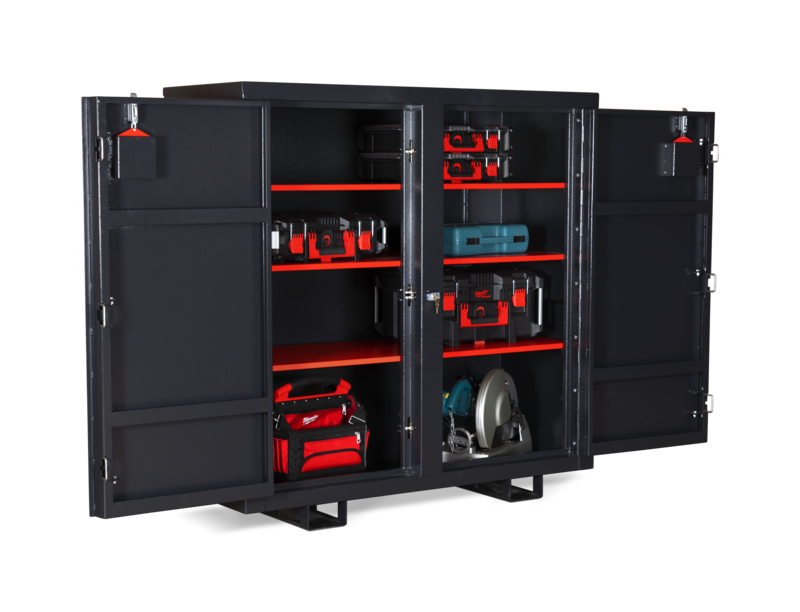
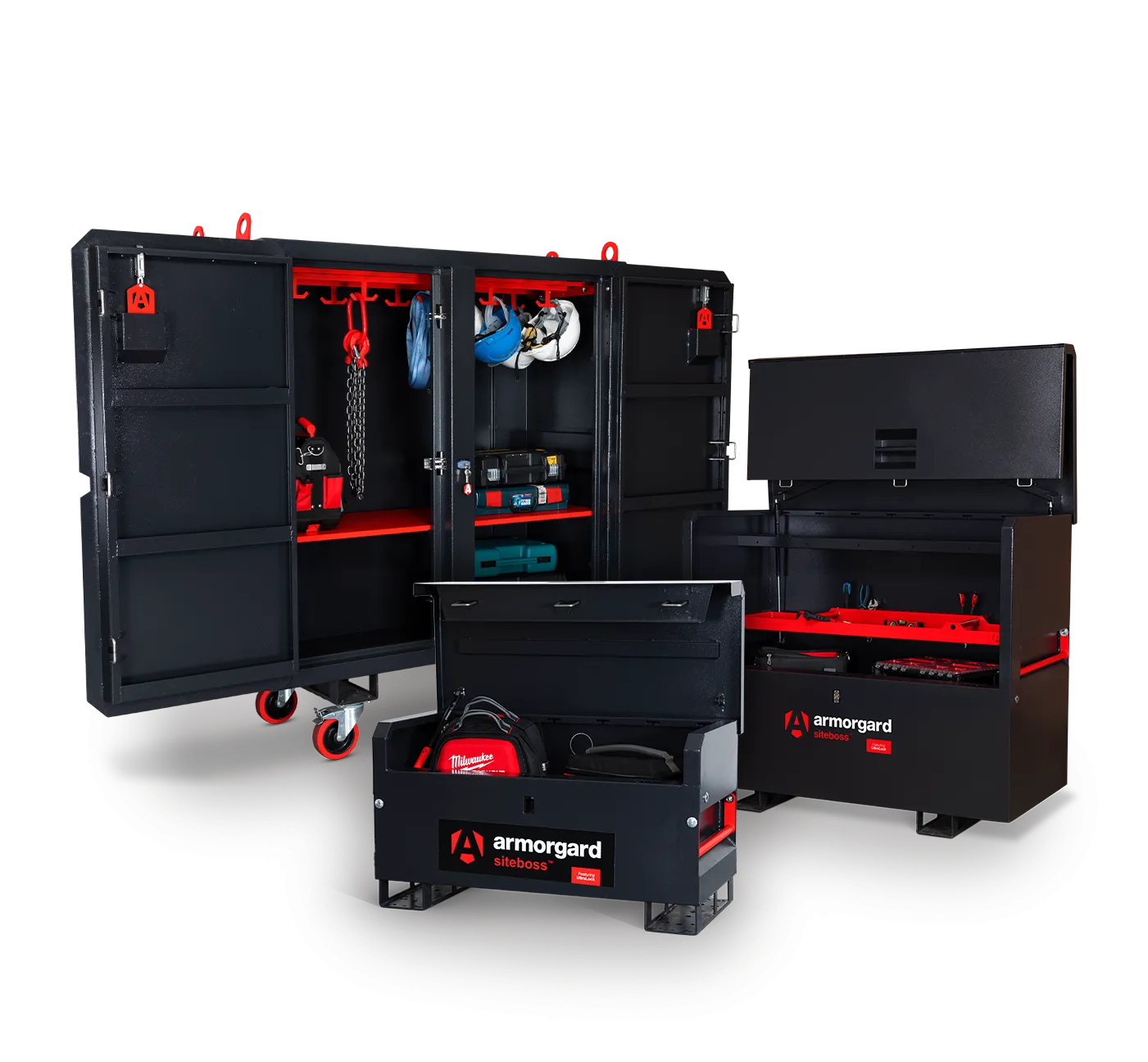
- Keep all equipment and supplies in secure jobsite boxes equipped with an advanced locking system.
- Mark equipment with an identification system.
- Keep a detailed inventory of all equipment and associated PINs.
- Install GPS trackers on larger pieces of equipment and high-value tools.
- Remove wheels, keys, and batteries to safeguard heavy-duty equipment.
- Park construction vans and trucks in brightly lit areas.
- Lock all doors and close windows when vehicles are unattended.
- Remove tools overnight or use a secure truck job box.
- Conduct regular site inspections to identify potential security gaps.
Equipment That Can Help
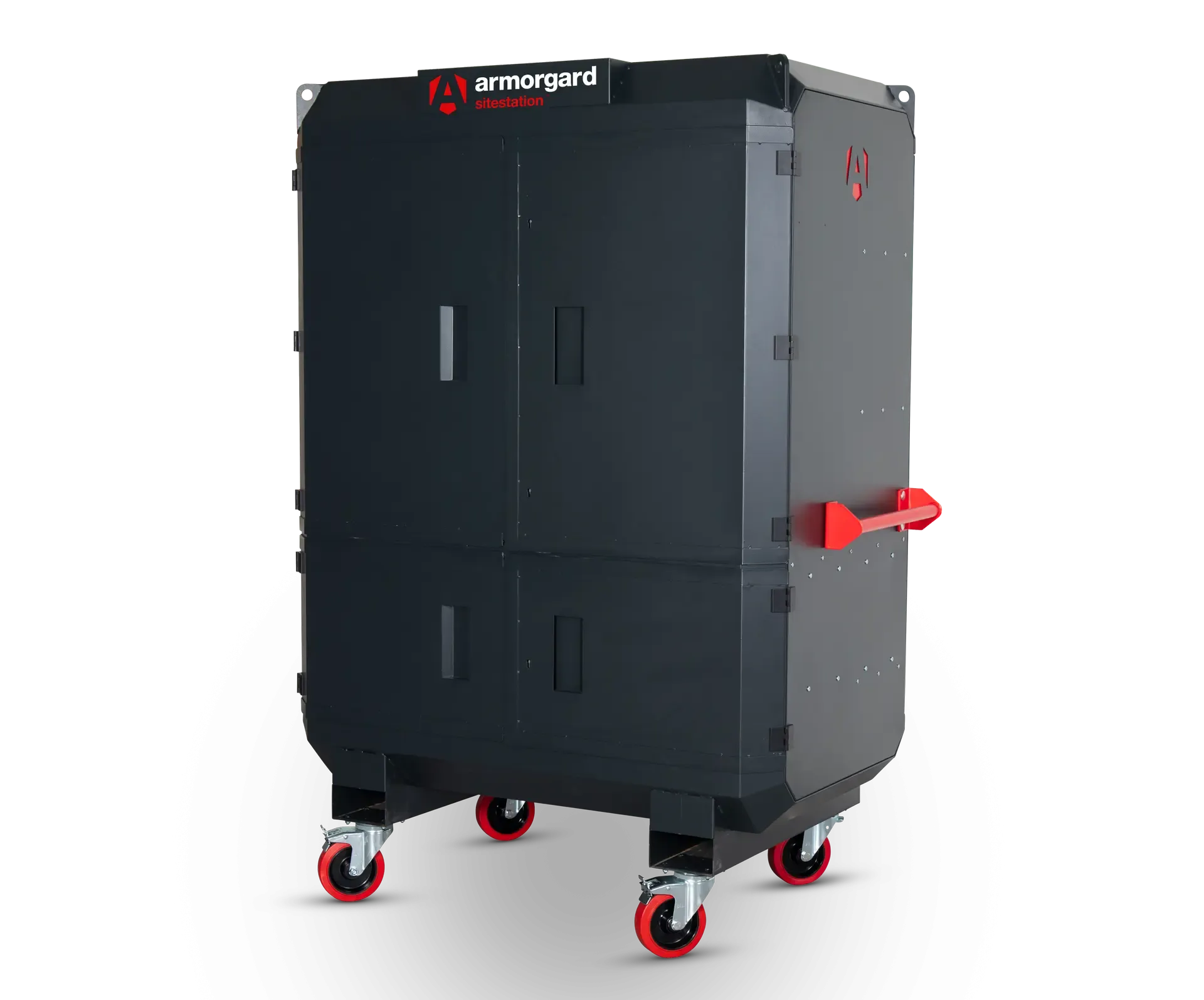
Setting up your jobsite with tamper-proof tool storage is one of the easiest ways to get ahead of construction theft. Armorgard offers a range of durable construction gang boxes designed to give you peace of mind that your valuable tools are safe on site, even when you’re away.
siteboss sb38 piano box

siteboss sb25 tool chest

siteboss sb48 jobsite cabinet

What To Do If Your Tools Are Stolen
If your on-site equipment does fall victim to construction theft, don’t panic. There are steps you can take to recover your tools.
- Immediately file a police report. Provide detailed descriptions and serial numbers of the stolen items.
- Notify your insurance provider. Be prepared to supply documentation of the tools’ value when you file your claim.
- If your equipment has GPS, use it to track the location of stolen tools.
- Search local pawn shops and online marketplaces for your materials and gear.
Tool Theft FAQs
Who is responsible for theft on a construction site?
Typically, responsibility for construction site theft lies with the site supervisor or general contractor. Sometimes liability is shared with property owners, subcontractors, or security firms. Check the construction contract for project-specific details.
Does insurance cover stolen tools?
Yes, specialized tool and equipment insurance protects items stolen from jobsites or taken during transit. Check with your specific insurance carrier for coverage information, rules, and restrictions.
What do I need to do to prove ownership of stolen tools?
Keep a detailed record of all of your equipment, including serial numbers, make and model information, photos, and receipts. Use apps like ToolWatch or Sortly to make tool tracking even easier. Remember: the more information you have about what was stolen, the higher your chances of recovering those items.